

Fashion symbolism loves to pretend it’s democratic. Wear what you want. Style has no rules.
But in reality, clothing has never existed outside of power.
What we call “personal style” is often filtered through class, race, age, and geography before it’s ever admired. The same outfit can read as aspirational or inappropriate, elevated or dangerous—depending entirely on who is wearing it. This is fashion symbolism at work: the quiet system of meaning we rarely acknowledge, but always respond to.
Here are ten fashion items that prove style is never neutral.
1. The Hoodie
The hoodie has become shorthand for contradiction. On a startup founder, it signals disruptive genius. A fashion insider, effortless cool. On a young Black man, it has too often been treated as a threat.
This is fashion symbolism at its most brutal: a garment that oscillates between comfort and criminalization based on the body inside it. The hoodie doesn’t change—society’s gaze does.
2. Designer Logos
Logos are supposedly about taste, but they are more accurately about permission. Loud branding on certain bodies reads as aspiration; on others, excess. The same logo that signals success for one wearer becomes a marker of “trying too hard” for another.
In fashion symbolism, understated wealth is revered, while visible ambition is judged—especially when it comes from those not expected to possess it.
3. Modest Dressing
Long sleeves, covered hair, layered silhouettes—when filtered through Western fashion language, modesty is reframed as restraint, elegance, even quiet luxury. On Muslim women and women of faith, the narrative shifts quickly toward control, limitation, or politics.
The irony is sharp: the same aesthetic praised on runways is questioned in real life. Fashion symbolism decides when modesty is stylish—and when it’s seen as suspect.
4. Natural Hair
Natural hair is celebrated when it’s temporary. Braids on a runway. Afros in an editorial. Locs as a “phase.”
But when natural hair is worn daily by Black people, it’s still policed—labeled unprofessional or disruptive.
Fashion symbolism allows cultural expression only when it’s detachable from the people who live it.
5. Baggy Clothing
Oversized silhouettes have become the uniform of Gen Z cool. On certain bodies, baggy clothing reads as intentional, styled, aware. On others, it’s interpreted as careless or lazy.
The difference isn’t fit—it’s perception. Fashion symbolism turns comfort into confidence only when the wearer already fits the image of legitimacy.
6. High Heels
Heels are sold as empowerment, yet constantly weaponized against the women who wear them. Too high? Trying too hard. Too often? Outdated. Too young? Inappropriate. Too old? Refusing to age.
The symbolism shifts with age and expectation, revealing how women’s fashion is never just about style—it’s about behavior.
7. Streetwear
Streetwear only gained respect once luxury houses validated it. Before that, it was dismissed as unserious, subcultural, even dangerous.
Once absorbed by fashion’s elite, it became “elevated.” Fashion symbolism exposes how creativity from marginalized communities often needs institutional approval before it’s taken seriously.
8. Vintage Clothing
Vintage is celebrated when it looks curated. When it looks necessary, it’s stigmatized.
The same secondhand jacket can signify sustainability and taste—or financial limitation—depending on who wears it and how much choice they’re assumed to have had.
Fashion symbolism transforms necessity into trend only when it’s optional.
9. Short Skirts
A short skirt is rarely just a short skirt. It’s read as confidence, rebellion, or irresponsibility depending on age, culture, and setting. Young women are scrutinized; older women are judged for refusing invisibility.
The symbolism attached to revealing clothing says less about fabric and more about who society believes deserves freedom.
10. Traditional Dress
Cultural clothing is celebrated when it’s exoticized—on holiday, in editorials, on Instagram. But when worn daily by those who belong to the culture, it’s often framed as foreign or unassimilated.
Fashion symbolism draws a clear line between admiration and acceptance—and they are not the same.
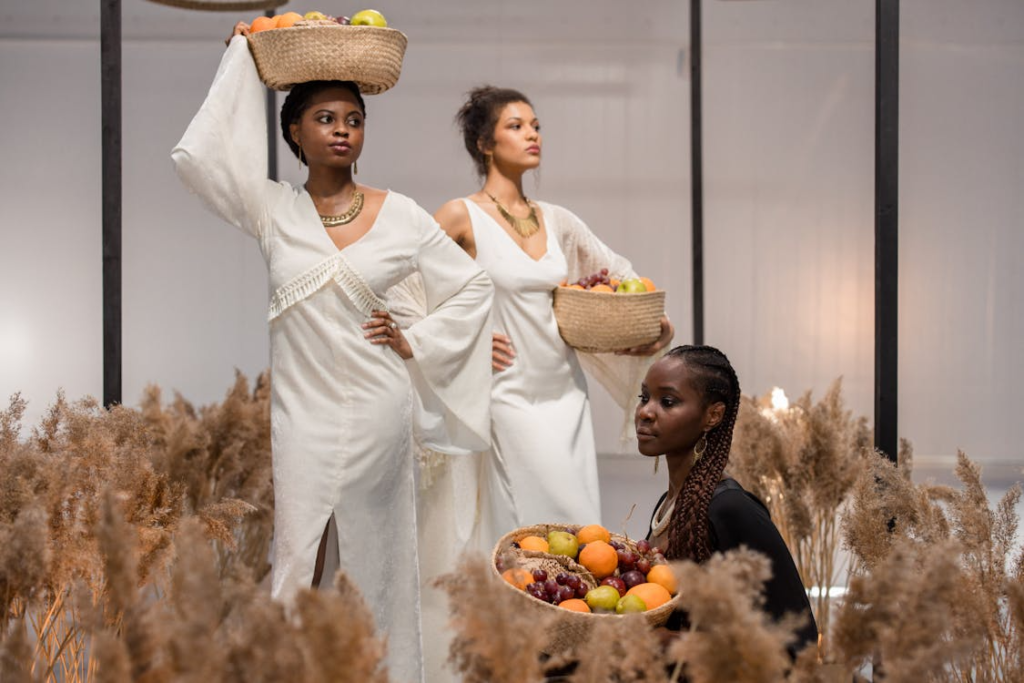
The Truth Fashion Symbolism Rarely Admits
Fashion doesn’t just express identity—it assigns value. What we wear is read long before it’s understood, filtered through systems that decide who gets elegance, who gets edge, and who gets suspicion.
Understanding fashion symbolism means recognizing that style is not judged equally. It never has been.
And until it is, fashion will continue to speak louder about society than about clothes.