






Long before fashion became an industry, it was a form of communication.
We have always used what we wear to say something about ourselves. Clothing can reveal where we come from, what we belong to, what we believe in, or even what we want others to understand without saying a word. For Libyan born, London based designer, Ruaa Elmansuri, the language of fashion is deeply connected to the traditions and memories she grew up around. From her grandmother weaving on a vertical loom to the Amazigh crafts that continue to inform her work today.
Her practice sits in the space between heritage and contemporary fashion, where tradition is neither replicated exactly nor discarded in favor of something entirely new. Instead, it is examined, understood and transformed through a personal perspective. Ruaa’s work offers one example of how the language of fashion can carry cultural memory forward, allowing inherited techniques, textiles and symbols to speak to a new generation.
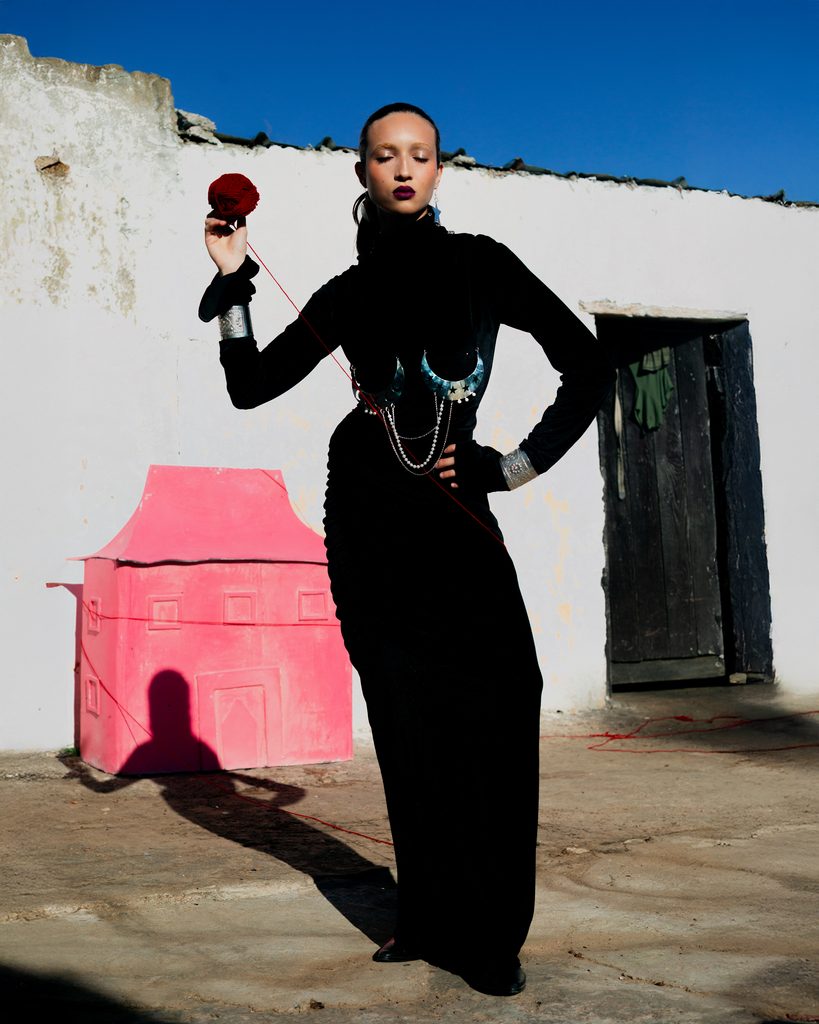
Clothing has always had something to say
Fashion does not need words to tell a story.
A garment can communicate through color, proportion, texture and construction. It can reference a particular place or period without explicitly naming it. Even the smallest detail can carry meaning when it comes from a tradition where clothing has historically been used to express belonging and identity.
This makes the language of fashion particularly powerful when it comes to culture. Unlike a written history, which records the past in words, clothing allows history to be experienced visually and physically. It can take something that may feel distant and make it present again.
That does not mean every traditional garment needs to remain unchanged. In fact, culture has always evolved through interpretation. Each generation inherits something from the previous one, then inevitably sees it through its own circumstances.
The result is not necessarily a loss of tradition. Sometimes, it is how tradition survives.
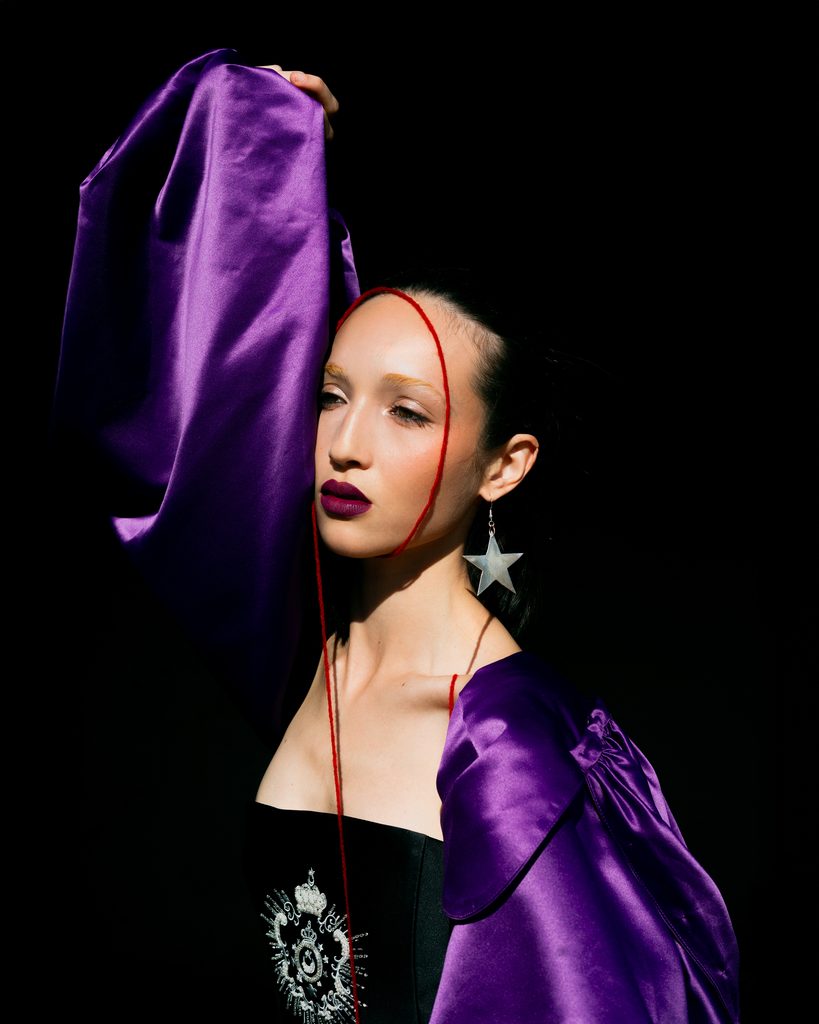
The difference between inspiration and understanding
Fashion has always borrowed from the world around it. Designers look to art, architecture, history and different cultures for inspiration, but there is a significant difference between using a cultural reference and understanding it.
For designers working with their own heritage, this creates an opportunity to look beyond the surface.
Libyan born, London based designer and artist Ruaa Elmansuri grew up around this kind of knowledge. Her approach begins with research. Before translating a reference into clothing, she considers its history, silhouette, details and symbolism. Only then does she begin to analyze what those elements might mean within her own work.
“I approach it by researching the history, silhouettes, details, and the symbolism behind it all,” she explains. “Then by analyzing it, I’m able to reinterpret those elements in my own design language.”
Her grandmother worked on a vertical loom, weaving yarn into blankets, while also making clothes and furnishings with a sewing machine. Her grandmother and aunt later taught her the fundamentals of sewing and pattern making.
Those experiences became part of a relationship with craft that would eventually find its way into her work.
During university, Ruaa began consciously exploring her Amazigh heritage through projects centered on craft and culture. What had once existed as part of her everyday surroundings became something she could research, examine and reinterpret.
That idea of curiosity is important because engaging with heritage does not have to mean claiming complete knowledge of it. Sometimes it begins with recognizing how much there is still to learn.
This is where fashion as language becomes more than a metaphor. Designers can take the visual vocabulary of a tradition and construct something new with it. A familiar silhouette can be altered through proportion. A traditional textile can meet an unexpected material. A symbol can appear within a contemporary garment while remaining connected to its origins.
The reference changes, but the meaning does not have to disappear.
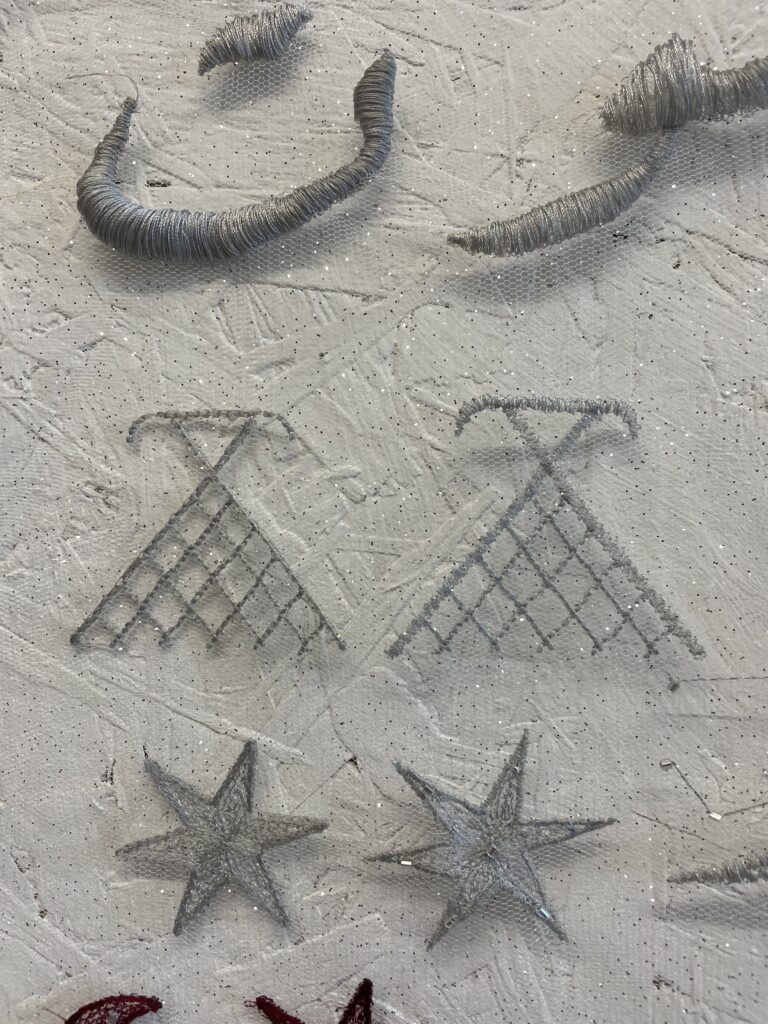
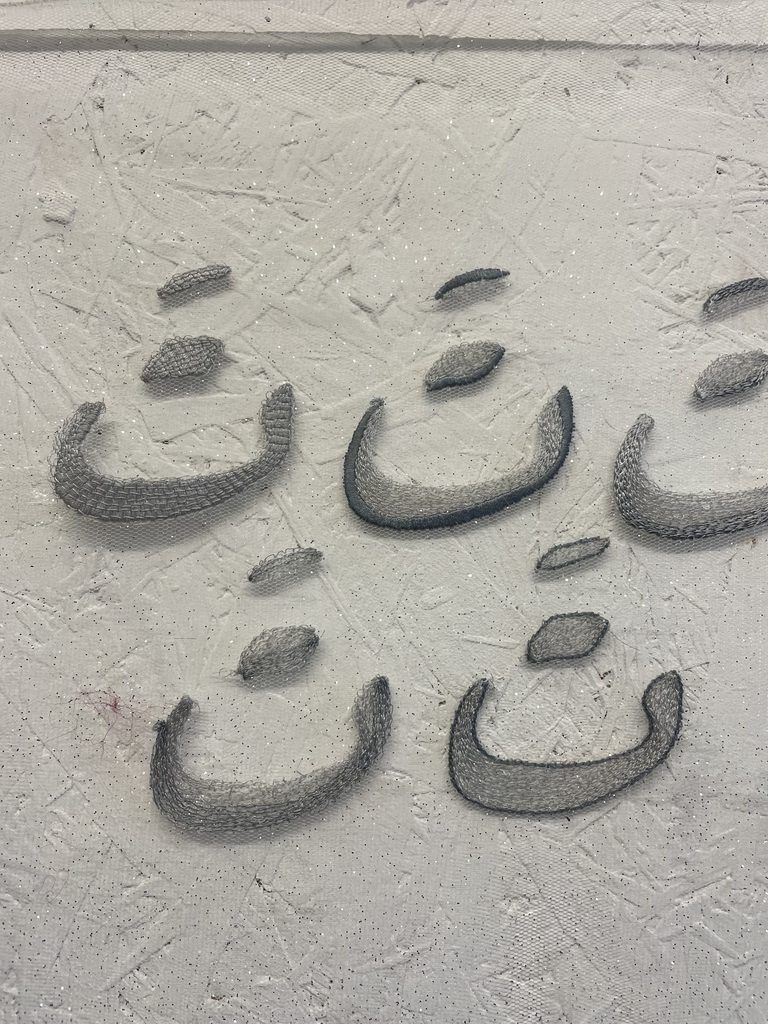
Keeping the meaning while changing the form
The desire to modernize does not always have to mean removing what makes something culturally significant.
In contemporary fashion, there is often an expectation that designers should constantly reinvent. Yet when working with heritage, transformation requires a different kind of responsibility. The question becomes not simply what can be changed, but what needs to remain.
Ruaa is open to experimenting with silhouettes, proportions and materials, but she draws a clear distinction between re-imagining a tradition and removing its context.
“I wouldn’t want to erase its cultural context,” she says.
That approach can be seen in her work, where Libyan and Amazigh references are transformed rather than simply reproduced. Traditional garments and textiles become starting points for contemporary silhouettes, while historical references are brought into dialogue with a new generation of fashion.
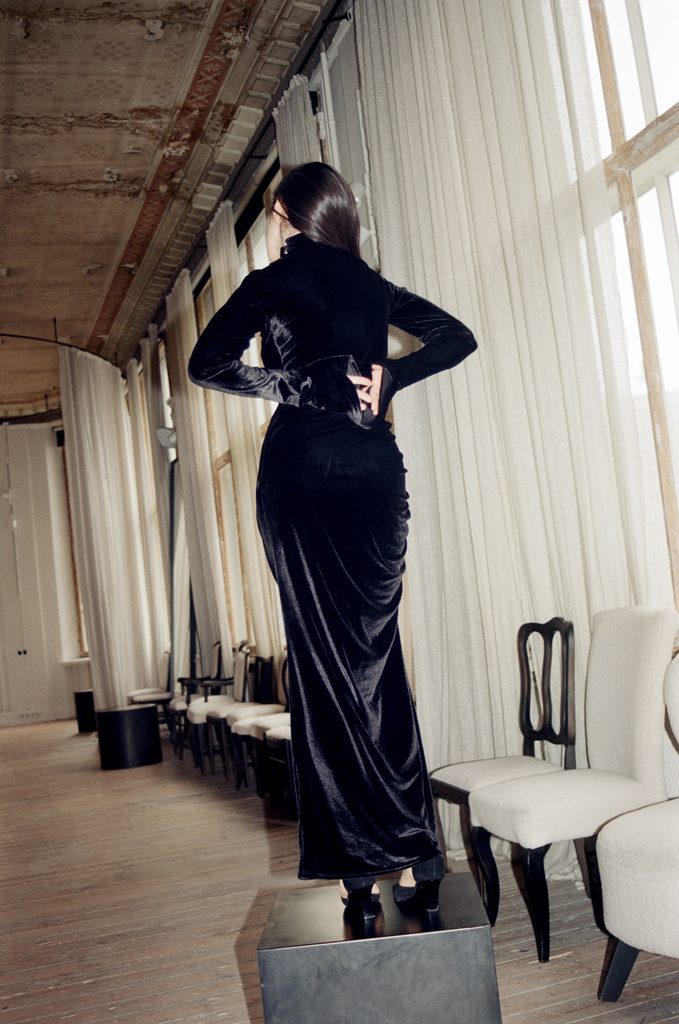
Her recent work has explored traditional Libyan garments including the houli, farashia and tmalfa alongside archival imagery and traditional textiles. In her SS26 collection, these references were brought into a contemporary setting through sculptural forms and a playful approach to proportion and construction.
This is one of the most compelling possibilities of the language of fashion. A designer can change the sentence without losing the meaning of the words.
When the personal becomes collective
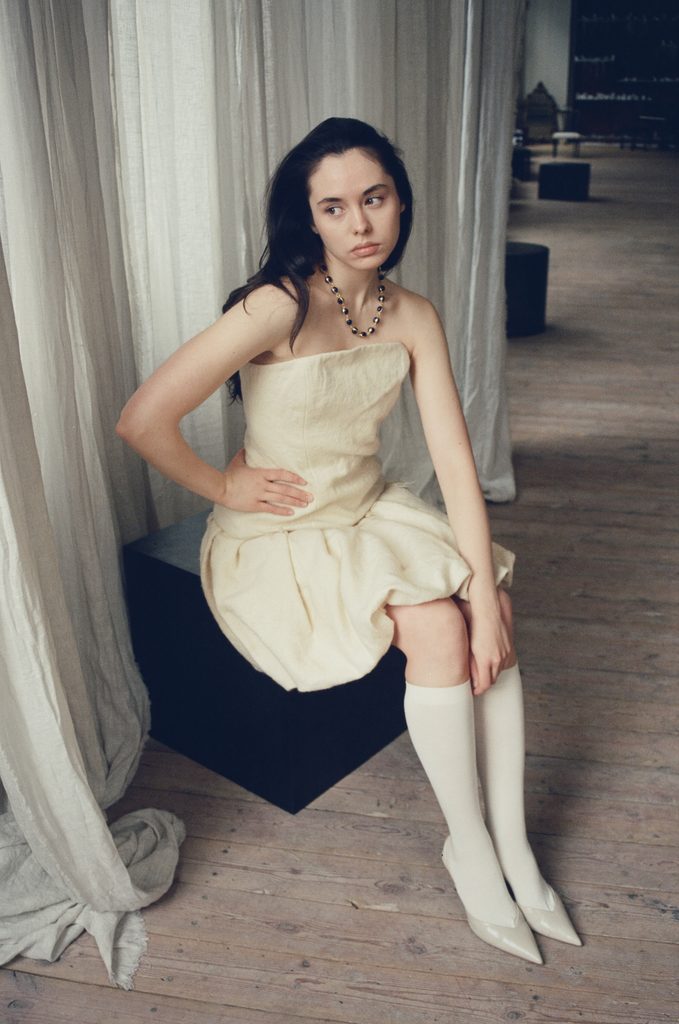
The most compelling cultural fashion is often deeply personal.
Instead of trying to speak for an entire culture, a designer can begin with their own experience of it: the objects they remember, the people who taught them, the places they grew up around and the traditions they encountered in everyday life.
Ruaa’s work demonstrates how that personal perspective can create a broader conversation. Her explorations of Amazigh craft and Libyan visual culture bring traditional references into contemporary fashion without attempting to present them as static historical artefacts.
Her recent work has incorporated references to traditional Libyan garments including the houli, farashia and tmalfa, alongside archival imagery and traditional textiles. These references become part of a wider design vocabulary, allowing the garments to exist simultaneously within history and the present.
This is one of the most interesting possibilities of fashion as language. A designer can speak from a very specific place while still being understood beyond it.
Ruaa has experienced that through the response to her work from fellow North Africans.
“The support and positive feedback from fellow North Africans that see value in my work means so much to me and motivates me to keep going,” she says.
When someone recognises a reference because it belongs to a world they know, fashion suddenly becomes a shared conversation. What began as one person’s memory can trigger recognition in someone else’s.
The future of inherited traditions
There is a growing desire within contemporary fashion to reconnect with things that feel slower, more personal and more rooted. Handcraft, traditional textiles and regional techniques are being reconsidered not simply for their visual qualities, but for the knowledge and histories they contain.
Yet the future of these traditions cannot depend entirely on reproducing the past.
They have to be allowed to evolve.
A technique passed from a grandmother to a granddaughter may eventually appear in a completely different context. A traditional textile can become part of a new silhouette. A symbol can move between generations while gaining another layer of meaning. The form changes, but something remains.
That is why the idea of fashion as language is so relevant to heritage. Languages survive because people continue to use them. They change, develop new expressions and absorb new influences, but they remain connected to what came before.
Fashion works in much the same way.
What we choose to say next
Perhaps the most meaningful way to preserve a tradition is not to place it behind glass, but to continue finding reasons to use it.
For designers drawing from their cultural histories, this means approaching heritage with enough respect to understand it and enough imagination to let it evolve. The past provides the vocabulary, but the present determines what happens next.
Ruaa describes her own approach as one of continuing development, wanting to expand on what she has already begun exploring and refine it “steadily and intentionally.”
There is no need for the language to be complete.
Fashion is constantly being rewritten. New generations give old references new meanings, memories become materials, and traditions once confined to family spaces find their way onto contemporary runways and into new wardrobes.
Perhaps that is what makes fashion as language so powerful. It allows us to communicate where we have been without being confined to it.
We can wear our histories without living in the past.
We can inherit something without simply repeating it.
And sometimes, the most meaningful things we have to say are the things we learned long before we knew we were listening.
Share This Article