






Through thoughtful silhouettes, timeless design, and an unwavering commitment to intention, SANAA is quietly reshaping what contemporary modestwear can look and feel like.
In a fashion landscape increasingly dominated by fleeting trends and overconsumption, SANAA stands apart through restraint. The contemporary womenswear label has built its identity around clean lines, subtle proportions, and pieces designed not for a single season, but for years of wear.
Designed for women who value considered dressing, SANAA creates garments that balance structure with ease, offering a refined approach to modern modestwear that feels both effortless and enduring. Rather than chasing novelty, the brand focuses on thoughtful silhouettes, versatile styling, and creating emotional longevity within a wardrobe.
Founded from a personal desire to find clothing that reflected both individual style and modest dressing, SANAA has become a label synonymous with quiet confidence. From fluid trench coats to carefully constructed dresses and wardrobe foundations, every piece is designed with purpose.
As conversations around contemporary modestwear continue to evolve, SANAA is proving that modest dressing can be expressive, fashion-forward, and deeply intentional without sacrificing practicality.
We spoke with the founder, Sanah, to discuss building a slow fashion brand, designing for longevity, and where she sees the future of modestwear heading.
Interview: SANAA Founder on Contemporary Modestwear, Slow Fashion & Designing with Purpose
Tell us a little bit about SANAA and why you decided to start the label?
SANAA began from a very personal place. I’ve always been drawn to thoughtful dressing and the way clothing can express who we are without saying a word. Yet I often found myself searching for pieces that reflected both my sense of style and my approach to modest dressing. There seemed to be a gap for women who wanted to dress modestly without compromising on silhouette, styling, or individuality.
The brand was built around the belief that modestwear can feel elevated, contemporary, and deeply considered while remaining effortless for everyday life. Every SANAA piece is designed to move beyond trend cycles, focusing instead on proportion, fabric, versatility, and timeless wearability.
At its core, SANAA is about creating pieces women return to instinctively. Clothing that feels quietly confident, adaptable, and designed to be worn and loved for years to come.
A lot of modest fashion still gets boxed into either “basic essentials” or occasionwear. Why was it important for SANAA to feel editorial and fashion-forward instead?
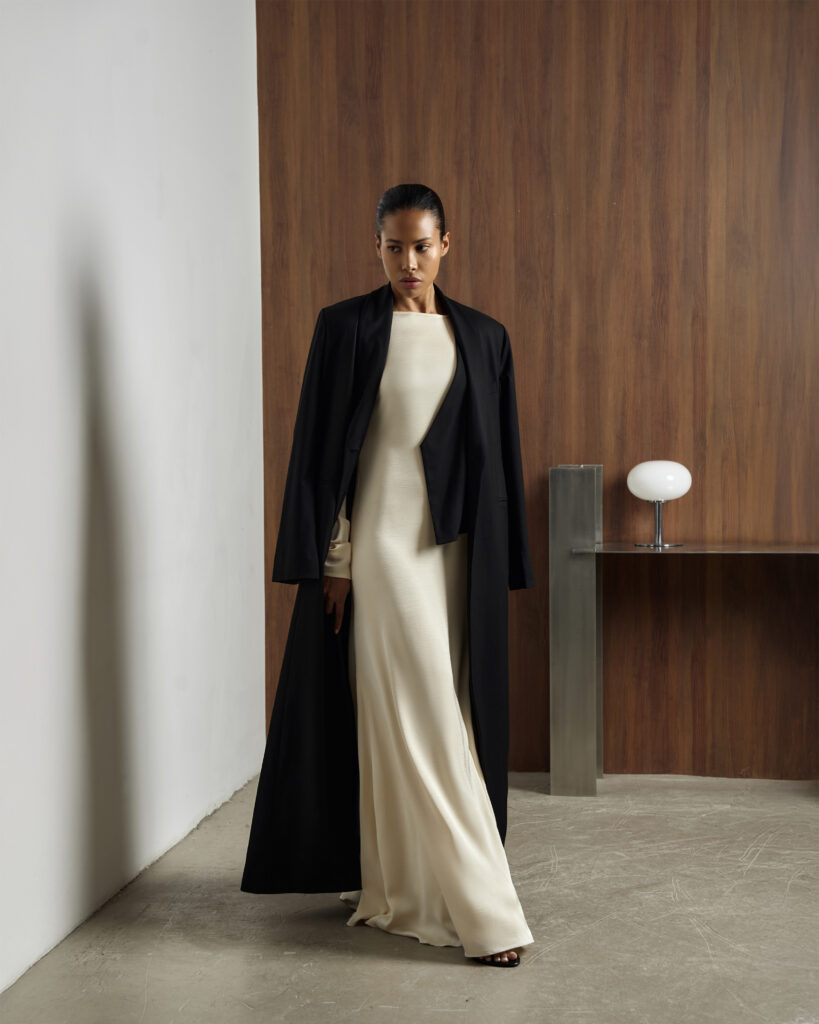
Because modesty exists within everyday life — it isn’t separate from creativity, self-expression, or personal style. For a long time, modestwear has been placed into very narrow categories, either overly simplified basics or highly occasion-driven dressing, when in reality women want pieces that feel expressive, elevated, and wearable all at once.
With SANAA, it was important to create collections that felt considered rather than simply covered. We focus on elevated essentials — pieces with thoughtful silhouettes, layering potential, and versatility that allow women to style them in ways that feel true to their own lives and personal aesthetic.
Our outerwear is designed to move effortlessly across seasons, while our co-ords can be worn together or separately, allowing women to make them their own. Pieces like the Azalea Dress are intended to become forever staples. I often think of it as our version of the classic little black dress — understated, versatile, and something you instinctively reach for time and time again.
We’re not interested in chasing trends or overproducing collections. Women are becoming increasingly intentional about what they buy, choosing fewer pieces with greater longevity and purpose. I believe there is real value in creating clothing that can be worn repeatedly, styled differently, and lived in over time.
Ultimately, SANAA is about expanding the conversation around modestwear — showing that it can be contemporary, refined, and deeply considered while remaining effortless for everyday life.
Your brand talks a lot about longevity and slow fashion. In an industry obsessed with speed and overconsumption, do you ever feel pressure to constantly produce more?
Surprisingly, no — because the brand was never built around volume or speed in the first place. From the beginning, SANAA was intended to move intentionally rather than reactively.
Of course there is external pressure within the wider industry to constantly release, constantly evolve, and constantly consume, but I think customers are becoming increasingly aware of that cycle. More women are looking for fewer, better pieces that genuinely hold value within their wardrobe.
For me, longevity is not only about durability — it’s also about emotional connection. If a woman continues reaching for a piece years later, then it has done its job.
How do you decide when a piece is “finished”? Is it about the look, the feel, or how it makes the wearer carry herself?
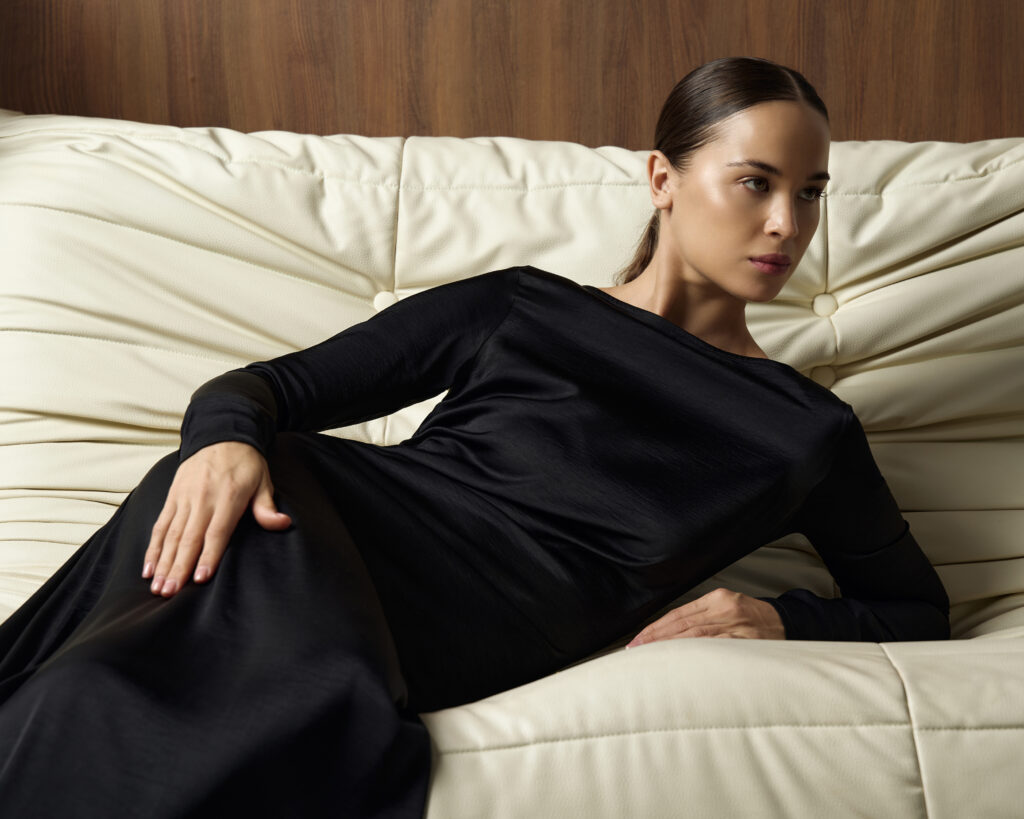
It’s definitely a combination of all three. A piece can look beautiful on a rail, but if it doesn’t feel right when worn, then it isn’t finished yet.
I’m very involved throughout the sampling process and always try everything on myself because fit, movement, and feeling are incredibly important to me. I pay close attention to how the fabric behaves, how the silhouette sits on the body, and even how instinctively you reach for the piece.
I think you know something is finished when nothing feels forced — when everything falls into place naturally and the wearer carries herself differently in it.
Is there a specific piece in your collections that you feel captures the essence of SANAA completely?
It’s difficult to choose just one, because I think the essence of SANAA really comes through in how the pieces work together as a wardrobe.
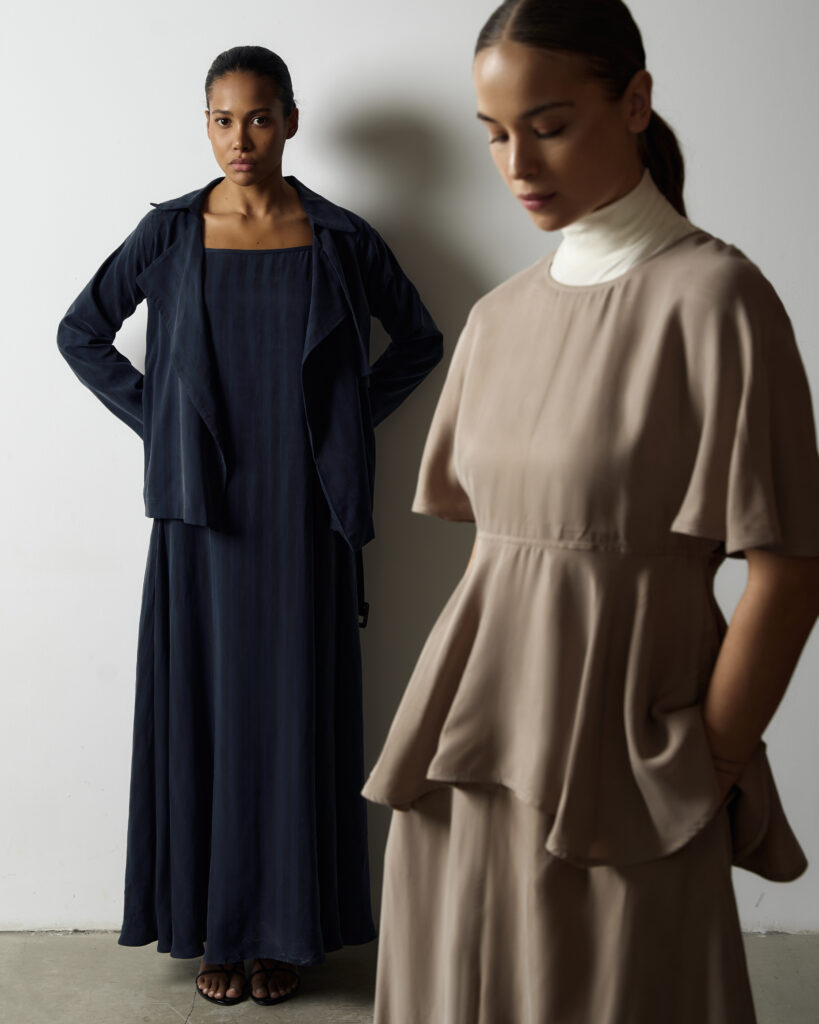
The Avena and Clover skirts represent that balance of structure and ease we’re known for — versatile foundations that can be styled in multiple ways depending on how you want to wear them. They move easily between everyday dressing and more considered moments without feeling defined by either.
The Azalea Dress is perhaps the closest expression of SANAA in a single piece. It has a relaxed, considered silhouette that doesn’t rely on detail for impact — instead, it’s about proportion, movement, and simplicity done with intention. It’s designed to be one of those pieces you return to instinctively. Worn on its own or layered with the Santal blazer, it shifts naturally depending on the occasion without losing its identity.
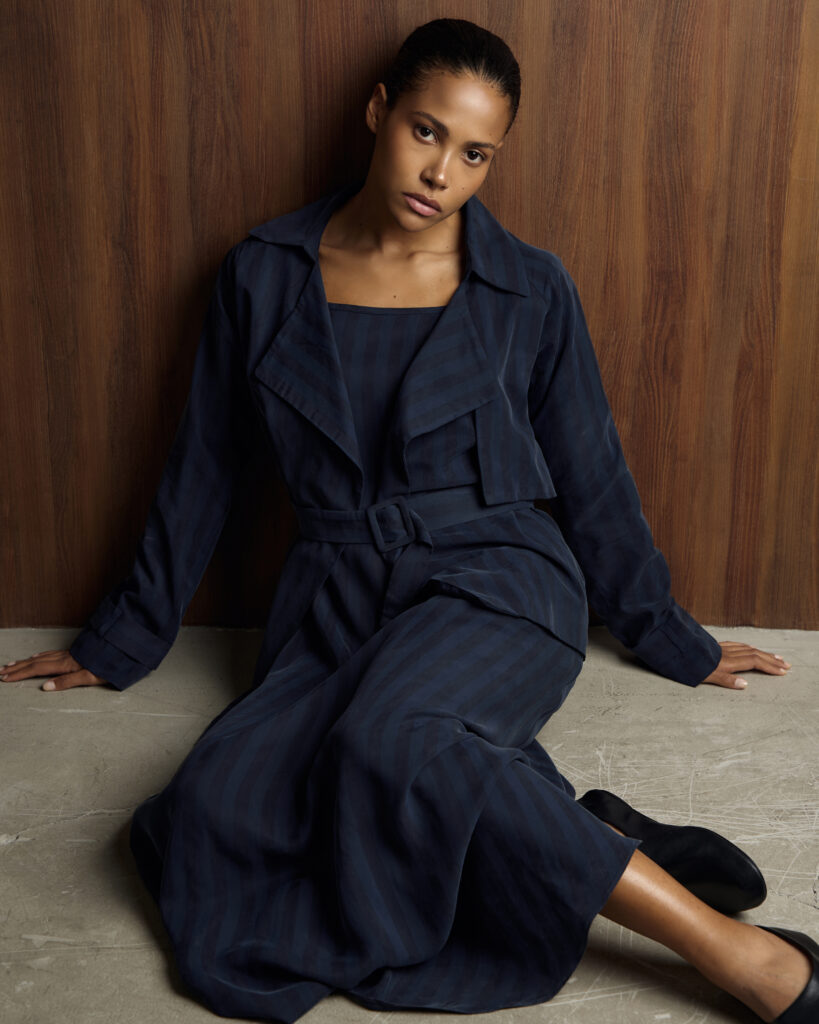
The Cassia trench coat also feels essential to mention. Crafted from 100% cupro, the cut and fluidity of the fabric give it a very distinct presence. It’s transeasonal, timeless, and has the ability to instantly refine even the simplest silhouette.
Together, these pieces reflect the SANAA approach to building a modern capsule wardrobe — considered, versatile, and designed to be returned to again and again.
If someone is discovering SANAA for the first time, what’s the one thing you’d want them to understand about the brand?
That every piece is designed with purpose — nothing exists just to fill a collection.
From the fabric to the silhouette to the way a piece moves on the body, everything is considered with how it will actually be worn and lived in. I’m always thinking about how a woman will return to it in her wardrobe, not just how it looks in isolation.
More than anything, I’d want people to understand that SANAA is about a different way of approaching modest dressing — one that feels refined, expressive, and grounded in everyday life rather than defined by trends or occasion.
What has been the most challenging part of building SANAA that people don’t often see?
Probably how emotionally consuming it can be. When you build something from the ground up, you care about every detail deeply — often far more than anyone else around you.
There’s also an enormous amount of decision-making happening behind the scenes that people never really see: from sourcing and sampling to production challenges and refining fit and proportion. It’s a continuous process of refining and recalibrating until everything feels right.
I’ve learned the importance of trusting your vision, being very considered in who you work with, and surrounding yourself with people who genuinely understand and support the standard you’re trying to build.
What advice would you give to someone starting a fashion brand right now?
Take your time building a strong foundation before thinking about launching. Be very clear on what your brand stands for, who you are designing for, and why it needs to exist in the wider landscape.
It’s also important to stay open, but selective. At the beginning especially, there is so much advice and direction coming from different places, and I’ve learned the importance of gently filtering what feels right for your own vision.
Most importantly, try to build from a place of clarity rather than imitation. I’ve found that the more certain you are about your own direction, the easier it becomes to stay consistent as things evolve.
What does modern dressing look like to you today, especially for women who want to feel both covered and confident?
Modern dressing, for me, is about intention rather than exposure. Women no longer want to choose between feeling put together and feeling comfortable within themselves — there is space for both.
Confidence today comes from wearing pieces that feel aligned with who you are, rather than dressing for external validation. Modest dressing, in particular, can feel powerful, refined, and expressive while still remaining understated.
Personally, I’m drawn to clean silhouettes, thoughtful layering, strong tailoring, and pieces that move easily between different parts of everyday life.
Where do you see the future of modestwear heading?
I think modestwear will continue evolving beyond being seen as a niche category and will become more naturally integrated within the wider industry.
There’s a growing understanding that modest dressing is not restrictive — it’s diverse, creative, and globally relevant. Women are looking for pieces that feel contemporary, elevated, and thoughtfully designed, rather than being treated as an afterthought.
I also think the direction will continue to move towards seasonless dressing, versatility, and more intentional consumption, which already feels very aligned with the values at the core of modestwear.
Share This Article