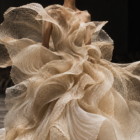









There was a time when a fashion show could leave you confused, uncomfortable, even slightly offended — and still be considered a masterpiece. A dress did not have to be practical. A silhouette did not have to flatter. A collection did not need to become a trending product by midnight. Sometimes, fashion simply had to make you feel something.
Today, the runway has a second audience beyond the people sitting in the front row: the algorithm, the consumer, the investor, and the person watching a 15-second TikTok who might eventually buy the bag.
A show can be beautiful, but is it beautiful enough to sell? Can it go viral? Will it attract a new generation of customers? And, perhaps most importantly, will it generate revenue?
These are the questions shaping luxury fashion today. And they lead to a bigger one: is fashion still art when everything has to sell?
When the Runway Became a Shop Window
Fashion has always been a business. Designers have never operated entirely outside the realities of money, and even the most celebrated creative visions have needed financial backing. The difference is that commercial success now feels increasingly inseparable from cultural relevance.
In its 2025 annual results, LVMH reported €80.8 billion in total revenue, while its fashion and leather goods division generated €37.77 billion, down from €41.06 billion in 2024. The figures illustrate the pressures facing even the world’s largest luxury groups.
When billions of euros are involved, creative experimentation becomes complicated. A collection is no longer judged exclusively by its craftsmanship, originality or ability to challenge expectations. It must also contribute to the future of a business.
Imagine a designer developing a collection around exaggerated proportions, unusual materials and silhouettes that question conventional beauty. The creative vision might be compelling, but other questions inevitably follow. Will customers wear it? Can it be produced profitably? Will it sell enough to justify the investment?
The runway is expected to inspire, while the shop floor must convert that inspiration into purchases.
The question is not whether fashion should make money. It is whether the need to make money is beginning to determine what fashion is allowed to become.
The Creative Director Is No Longer Just a Designer
Consider the arrival of Jonathan Anderson at Dior in 2025. Having established a distinctive creative identity through his work at JW Anderson and Loewe, Anderson stepped into one of fashion’s most influential houses, with the challenge of introducing a new vision while respecting an enormous legacy.
His Dior debut was more than a creative appointment. It was a cultural event, generating anticipation across fashion media and social platforms. Every detail, from the collection itself to its references and styling, became part of the conversation surrounding the house’s future.
This is the modern creative director’s dilemma: they are expected to build a world, preserve a legacy, generate headlines and sell products. Often simultaneously.
A new designer can reinvigorate a brand, attract younger customers and make an established house relevant again. But that excitement comes with expectations. The collection must feel new without alienating existing customers, ambitious without becoming commercially impractical.
The designer must be an artist, but also a strategist and storyteller. Their work extends beyond the clothes to campaigns, celebrity placements, casting and the online conversation that follows.
When the entire fashion world is watching, even a creative risk can become a commercial calculation.
When Going Viral Becomes Part of the Brief
Imagine a collection so strange that people cannot stop talking about it. The proportions are exaggerated, the styling is unsettling, and the clothes seem designed for a world that does not quite exist.
In another era, that might have been enough. The collection would challenge expectations, influence other designers and perhaps become important only years later.
Today, it might also need to produce a viral image.
Fashion’s relationship with social media has changed how creative success is measured. A runway moment can be clipped, reposted, debated and transformed into a meme before the final model has left the catwalk. Attention has become an asset, and brands know it.
But attention and artistic value are not the same thing.
A deliberately outrageous dress might generate millions of views without communicating anything beyond shock. Meanwhile, a beautifully constructed collection might receive comparatively little attention because its ideas are quieter or more difficult to explain in a single image.
This is where fashion art risks becoming performance engineered for the feed.
The problem is not spectacle. Fashion has always understood the power of theatricality. The problem begins when spectacle becomes the objective, leaving the clothes to serve as props in a marketing exercise.
When a collection is designed primarily to produce a viral moment, the question shifts from What are we trying to say? to What will people share?
And those are two very different creative briefs.
Can Commercial Fashion Still Be Art?
Absolutely. The assumption that wearable clothing is somehow less artistic than an extravagant runway creation misunderstands what design can do.
A perfectly cut jacket, an unexpected fabric combination or a familiar silhouette transformed through proportion can be every bit as considered as a theatrical showpiece. Fashion is a material art form, after all. Unlike a painting displayed behind glass, clothing moves through the world, touches the body and participates in everyday life.
The distinction is not between clothes that sell and clothes that do not. It is between clothing created with a genuine point of view and clothing created primarily to satisfy existing demand.
Consider the work of designers such as Rei Kawakubo at Comme des Garçons, whose unconventional silhouettes have challenged conventional ideas of beauty and the human form. Her work demonstrates that fashion can provoke, confuse and inspire without making conventional wearability its only priority.
Of course, not every designer needs to be avant-garde. Nor should commercial success be treated as evidence of artistic compromise. A commercially successful collection can still be original, technically exceptional and culturally significant.
The danger emerges when success becomes a formula.
A silhouette becomes a bestseller. The bestseller becomes a signature. The signature becomes an expectation. Eventually, the designer may find themselves reproducing the very idea that made them interesting in the first place.
If a designer is only permitted to create what customers already understand, how can they create something customers have never seen before?
The Shareholder in the Front Row
There is another audience that rarely appears in fashion-week photographs: the shareholder.
Luxury groups operate within financial systems that demand profitability, growth and convincing long-term strategies. Their creative directors may have considerable freedom, but that freedom exists within organizations responsible for employees, manufacturing, retail networks and investors.
The pressure is not necessarily an executive telling a designer which dress to make. It can be subtler: tighter budgets, sales targets, expectations around bestselling products or the need to justify expensive runway productions.
Yet financial discipline is not automatically the enemy of art. A financially stable house can fund experimental collections, support skilled artisans and give designers the resources to realize ambitious ideas. Without commercial success, creative freedom can become difficult to sustain.
The real question is whether a business sees creativity as an investment in its future or an expense that must be justified by immediate returns.
Luxury fashion sells exclusivity, but it must operate at scale. It sells individuality, but it needs products that appeal to enough people to sustain a global business. It sells dreams, even as those dreams must eventually appear on a balance sheet.
The contradiction is not new. What has changed is the speed at which creative work is expected to prove its value.
So, Is Fashion Still Art?
Perhaps fashion has never been able to separate itself entirely from commerce. Designers have always needed materials, workshops, clients and money. What feels different today is the expectation that every collection must generate attention, cultural relevance and commercial returns almost immediately.
A collection can be judged online before it reaches stores. A campaign can be measured through engagement. A designer’s cultural relevance can appear to rise or fall with the next viral moment.
Art, however, does not always operate on that timeline.
Some ideas need years to become influential. Some collections are misunderstood when they first appear. Some clothes matter precisely because they resist the tastes and expectations of their moment.
Fashion art needs room for those possibilities — for the strange collection that does not immediately sell, the silhouette that takes time to understand and the designer who refuses to repeat a winning formula simply because it worked last season.
The most compelling fashion houses will be those that understand the difference between using creativity to sell and allowing sales to dictate creativity.
Because a runway show should make us want to look closer, not simply shop faster. A collection should leave us with an idea, not just a product link. And a designer should be allowed to create something that challenges us before asking whether we would wear it.
Fashion can be commercial and still be art. But when the only acceptable creative decision is the one that guarantees a return, the industry risks losing the very thing that makes luxury desirable in the first place: the possibility of the unexpected.
Perhaps the greatest luxury in fashion today is not a bag, a dress or a perfectly tailored jacket. It is the freedom to create something that does not have to justify its existence by selling.
Share This Article