








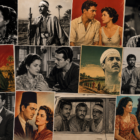

Arabic films have a rich history of stories exploring love, class, politics, family, desire, identity and everything in between. From the golden age of Egyptian cinema to Palestinian political dramas and Kuwait’s early film movement, these films did more than entertain, they reflected the people, places and social realities of their time, capturing entire worlds on screen.
Some are glamorous. Some are devastating. Some are surprisingly funny. And some feel almost unsettlingly relevant today.
If your idea of old Arabic films begins and ends with black-and-white romance, consider this your introduction to the films that shaped Arab cinema.
1. Cairo Station (باب الحديد) — 1958
Directed by Youssef Chahine | Egypt
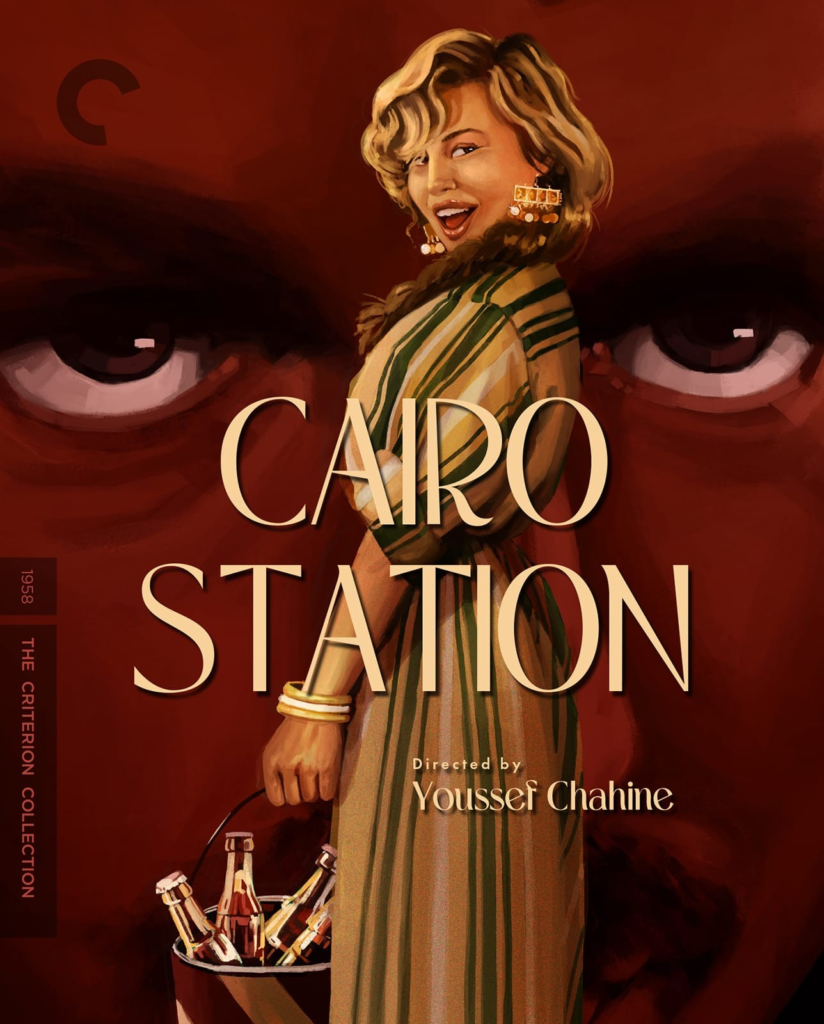
If you watch only one film from this list, make it Cairo Station. Directed by Youssef Chahine, the film is regularly regarded as one of the greatest Arab films ever made, and it topped the Arab Film and Media Institute’s 2025 ranking of the 100 Greatest Arab Films.
The story takes place almost entirely inside Cairo’s main railway station, where Qinawi, a poor newspaper seller, becomes dangerously obsessed with Hanuma, a beautiful drinks vendor who is engaged to another man. What begins as a seemingly simple story of unrequited love slowly transforms into a dark psychological thriller.
What makes Cairo Station extraordinary is how modern it feels. Chahine explores loneliness, desire, class, sexuality and the changing social landscape of 1950s Egypt without making the film feel like a history lesson.
Why watch it: For the cinematography, the tension and the reminder that Arab cinema was experimenting with psychological storytelling decades ago.
2. The Night of Counting the Years (المومياء) — 1969
Directed by Shadi Abdel Salam | Egypt
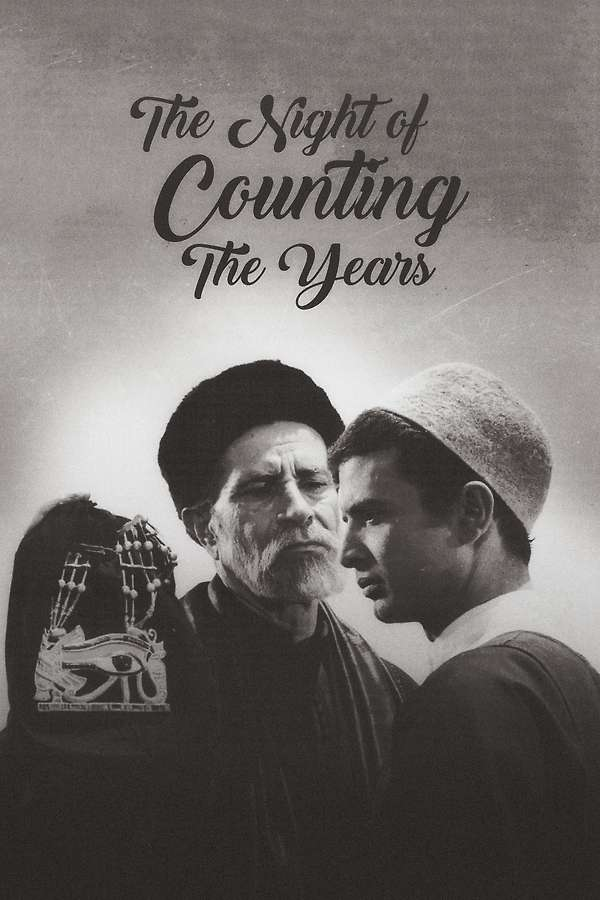
Beautiful, haunting and almost hypnotic, The Night of Counting the Years — also known as The Mummy — is one of those films that feels less like something you’re watching and more like a dream you’re entering.
Set in Upper Egypt in the late nineteenth century, the story follows a young man from the Horabat tribe who discovers that his family has been secretly looting ancient royal tombs and selling their treasures. He is forced to confront the conflict between protecting his family’s livelihood and preserving Egypt’s cultural heritage.
There is very little conventional action. Instead, the film relies on silence, atmosphere, landscapes and extraordinary visual composition.
It was ranked first in a major Egyptian critics’ poll of the country’s best films and second in the Arab Film and Media Institute’s 2025 list of the greatest Arab films.
Why watch it: If you want something visually spectacular, deeply Egyptian and completely unlike modern blockbuster cinema.
3. The Blazing Sun (صراع في الوادي) — 1954
Directed by Youssef Chahine | Egypt
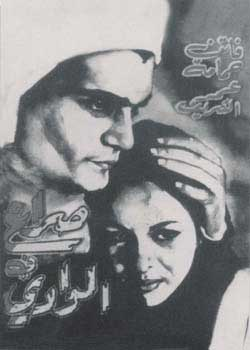
Before Omar Sharif became an international star, he made his screen debut in Youssef Chahine’s The Blazing Sun.
The film follows Ahmed, a young man from a poor family who falls in love with Nadia, the daughter of a wealthy landowner. Their romance is complicated by an ongoing conflict between Ahmed’s family and Nadia’s powerful father.
On the surface, it is a classic forbidden-love story. Underneath, however, it is about wealth, power and the rigid class structures of Egyptian society.
It also gives you a fascinating glimpse of a very young Omar Sharif alongside one of Egypt’s most celebrated actresses, Faten Hamama.
Why watch it: For old-school Egyptian glamour, Omar Sharif before Hollywood and a love story that doubles as social commentary.
4. The Nightingale’s Prayer (دعاء الكروان) — 1959
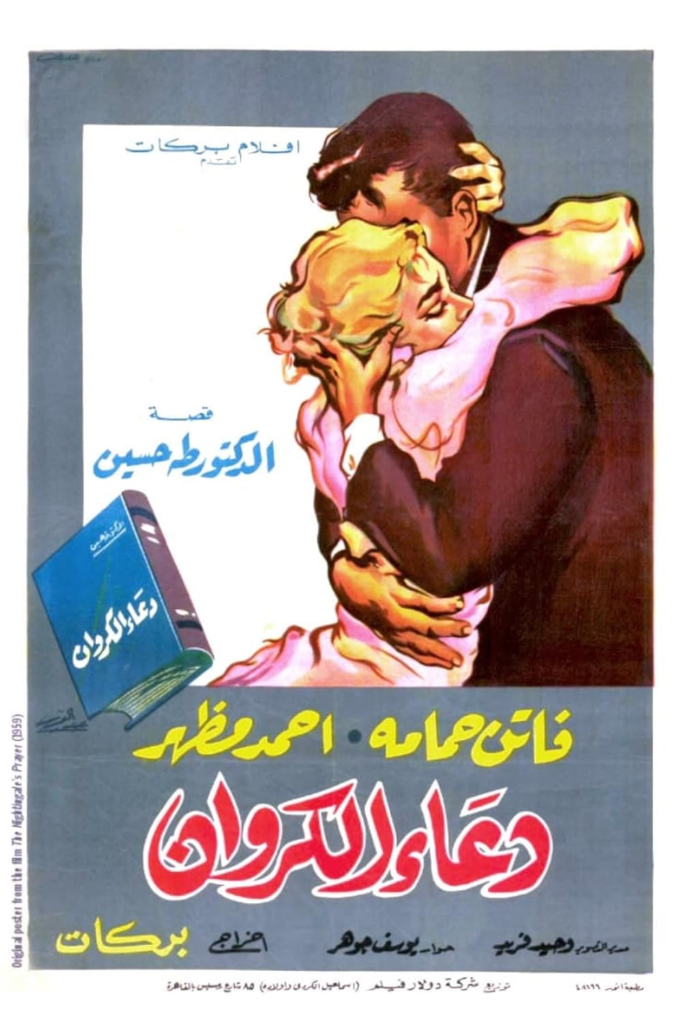
Directed by Henry Barakat | Egypt
Based on the novel by Egyptian writer Taha Hussein, The Nightingale’s Prayer follows Amna, a young woman whose family is destroyed after her sister is dishonoured by a wealthy man.
After being sent away with her mother, Amna becomes determined to avenge her sister. But revenge becomes complicated when she unexpectedly develops feelings for the very man she was supposed to destroy.
Faten Hamama gives one of her most memorable performances, and the film explores honour, gender, class and the limited choices available to women in conservative societies.
It was included among the most highly regarded Egyptian films in a major critics’ poll.
Why watch it: For Faten Hamama, the dramatic tension and a story about female agency that still feels surprisingly relevant.
5. The Sin (الحرام) — 1965
Directed by Henry Barakat | Egypt
The Sin is not an easy watch, and that’s exactly why it belongs here.
Set among agricultural workers in rural Egypt, the film follows Aziza, a poor woman whose life takes a devastating turn after she is sexually assaulted. Terrified of the consequences and the social stigma surrounding an unmarried pregnancy, she makes an impossible decision.
The film examines poverty, patriarchy, shame and the brutal inequalities faced by rural women. Rather than presenting its protagonist as simply a victim, it asks what happens when society gives someone no good choices.
The film ranked second in an influential Egyptian critics’ selection of the country’s greatest films.
Why watch it: Because some of the most powerful films aren’t comfortable. The Sin is social commentary disguised as melodrama, and it hits hard.
6. The Land (الأرض) — 1970
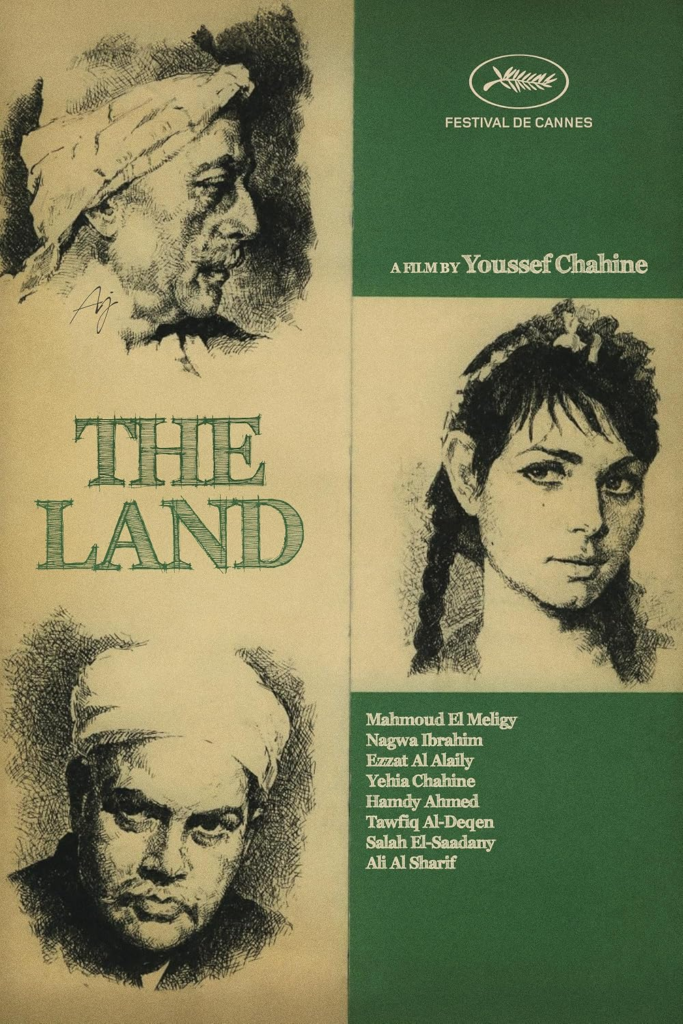
Directed by Youssef Chahine | Egypt
If Cairo Station shows Chahine’s ability to create psychological tension, The Land demonstrates his ability to turn an entire community into the protagonist.
Set in a rural Egyptian village, the film follows farmers fighting against wealthy landowners and a government decision that threatens their access to water and their ability to cultivate their land.
The story gradually becomes a battle over dignity, belonging and survival.
At its heart, The Land is about something universal: what happens when ordinary people are pushed far enough that they have nothing left to lose.
The film was ranked third in the Egyptian critics’ poll and sixth in the Arab Film and Media Institute’s 2025 ranking.
Why watch it: For its epic storytelling, political undertones and some genuinely unforgettable performances.
7. The Second Wife (الزوجة الثانية) — 1967
Directed by Salah Abu Seif | Egypt
A corrupt mayor wants a child. His wife cannot have one. His solution? Force a poor married woman to become his second wife.
The Second Wife sounds like a melodrama, but it is also a sharp satire about power, poverty and corruption.
The film centres on Fatma, a working-class woman whose marriage and autonomy are threatened by a wealthy man who believes money and political influence give him control over everyone around him.
The brilliance of the film is that it manages to be entertaining while quietly dismantling the social hierarchy around its characters.
The film is also highlighted by the American University in Cairo Press among the essential productions of Egyptian cinema.
Why watch it: For Soad Hosny, the outrageous storyline and a surprisingly modern critique of power dynamics.
8. The Will (العزيمة) — 1939
Directed by Kamal Selim | Egypt
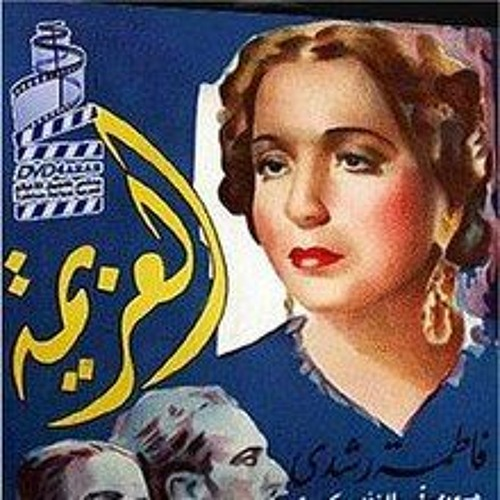
Let’s go all the way back.
Released in 1939, The Will is one of the earliest films on this list and is considered one of the foundational works of Egyptian cinema. It follows Mohamed, a young man from a working-class neighbourhood who falls in love with Fatma, while pretending to be wealthier than he actually is.
What makes the film particularly interesting today is its portrait of everyday Cairo — its streets, social classes, ambitions and relationships.
It isn’t simply important because it is old. It is important because it helped prove that Egyptian cinema could tell sophisticated stories about ordinary people.
The film was ranked among the greatest Egyptian films in the influential Al-Ahram critics’ poll, while AUC Press includes it in its collection of 101 essential Egyptian films.
Why watch it: To see where Egyptian cinematic storytelling really began — and how little some human ambitions have changed.
9. The Dupes (المخدوعون) — 1972
Directed by Tewfik Saleh | Palestine/Syria
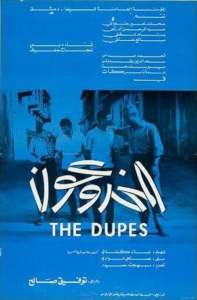
Moving beyond Egypt, The Dupes is one of the most important Palestinian films of the twentieth century.
Based on Ghassan Kanafani’s novella Men in the Sun, the film follows three Palestinian refugees who attempt to reach Kuwait in search of work and a better life. Their journey takes place in the aftermath of the Nakba, with each man carrying his own version of displacement and desperation.
The film is spare, political and devastating without relying on spectacle.
It was ranked eighth in the Arab Film and Media Institute’s 2025 list of the greatest Arab films and has been described as an early defining work of Palestinian revolutionary cinema.
Why watch it: For its storytelling, its political significance and the way it turns displacement into an intensely personal story.
10. The Cruel Sea (بس يا بحر) — 1972

Directed by Khalid Al-Siddiq | Kuwait
A reminder that the history of Arabic cinema doesn’t begin and end in Cairo.
The Cruel Sea is one of the landmark films of early Kuwaiti cinema. Set in a coastal community before the discovery of oil transformed the country, it follows a young woman whose life and love are shaped by her family’s dependence on the sea and the dangers faced by pearl divers.
The film captures a Kuwait that feels almost completely removed from the skyline and wealth we associate with the country today.
It is ultimately a story about love, class, tradition and the collision between old ways of life and an uncertain future.
Why watch it: For a glimpse into pre-oil Kuwait and a side of Gulf history that rarely makes it onto international screens.
Why Old Arabic Films Matter
The easiest way to dismiss old films is to assume that because the clothes, cars and technology look different, the stories must feel distant.
But watch these films closely and something else happens.
The arguments about class are still familiar. The pressure placed on women still resonates. The obsession with status hasn’t disappeared. Neither has migration, displacement, forbidden love, corruption, family expectations or the desire to escape the circumstances you were born into.
What has changed is the backdrop.
And perhaps that’s the most interesting thing about revisiting old Arabic cinema today. These films aren’t simply windows into another era, they’re reminders that many of the questions we are asking now have been asked before, just in different clothes.
So skip the algorithm for one night. Put your phone down, make some Arabic coffee, and watch something made decades before the internet decided what was worth watching.
You might discover that the old films weren’t old at all.
A good place to start: Cairo Station if you want a thriller, The Nightingale’s Prayer if you want drama, The Second Wife if you want something entertaining, The Night of Counting the Years if you want something visually extraordinary, and The Dupes if you’re looking for something that will stay with you long after the credits.
Share This Article